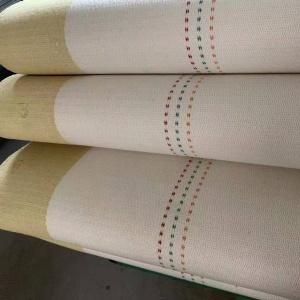
In modern corrugated board manufacturing, the corrugator belt installed on the double facer represents a critical control point for product quality and operational efficiency. This component, often referred to as the corrugator belt, orchestrates a complex interplay of conveyance, compression, heat transfer, and vapor extraction—all of which are essential to producing flat, well-bonded board at high speeds.
Operational Role and Mechanical Context
The belt is positioned directly over the hot plate section of the double facer. As the paper web—comprising the glued single-faced corrugated medium and the outer liner—enters this heated zone, the belt acts as a dynamic interface. It applies uniform pressure across the entire width of the board, ensuring that the starch-based adhesive is properly activated and cured. Simultaneously, the belt's permeable structure allows water vapor generated during the curing process to escape, preventing adhesive failure and board distortion. The belt also participates in the drying cycle by absorbing moisture from the board and releasing it during the return run.
Material of Corrugator Belt
The selection of materials is a decisive factor in belt performance and service life. Two principal categories are widely used in the industry:
Woven Cotton Corrugator Belt: These belts combine the natural moisture-wicking properties of cotton with the mechanical strength of synthetic fibers. This construction offers a proven balance of absorbency and durability, making it suitable for a variety of production speeds. Kevlar edge reinforcement is available to enhance resistance to heat and edge wear.
Needle-Punched PET Corrugator Belts: Manufactured from non-woven polyester fibers, these belts are characterized by their high tensile strength, dimensional stability, and resistance to thermal degradation. The uniform pore structure of needle-punched fabrics ensures consistent air permeability. For applications involving elevated hot plate temperatures, Nomex fibers are often integrated into the belt edges as a protective measure.

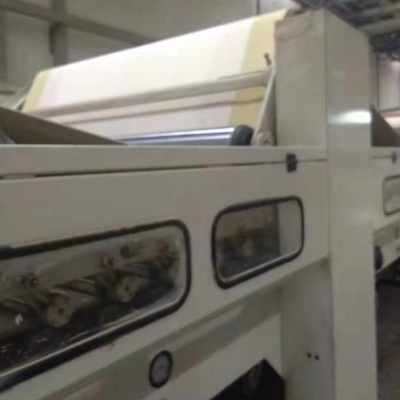
Critical Technical Parameters for Corrugator Belt (BB/T 0022-2017)
Air Permeability: This specification is paramount. The belt must permit an airflow of no less than 0.9 × 10² cm³/(cm²·min·kPa) at a pressure differential of 0.735 kPa. Inadequate permeability can trap steam, leading to blistering and compromised bond integrity.
Mechanical Strength: The warp direction must achieve a tensile strength of ≥200 N/mm, with the weft direction at ≥100 N/mm. Dimensional control is equally important; the belt's warp elongation must be confined to -0.8% to 0.5% to maintain proper tension and tracking over time.
Thermal Endurance: The belt must withstand continuous exposure to hot plate temperatures ranging from 180°C to 200°C. Huatao belts are engineered to meet a standard heat resistance of 220°C, with specialized Kevlar-edge versions capable of handling 350°C.
Joint Integrity: Surface continuity is essential. Thickness variation at the belt joint must not exceed ±0.5 mm. Common jointing methods include hot-pressed flocked seams and rubber-filled seams, with custom solutions available for unusual operating conditions.
Huatao Specification of Corrugator Belt
Width: 1600 mm – 3300 mm
Maximum Operating Speed: 450 m/min
Thickness: 8.5 mm – 10 mm
Operational Best Practices on Corrugator Belt
To maximize belt life and minimize unscheduled downtime, the following maintenance protocols are strongly recommended:
Initial Break-in: New belts should be conditioned by running at reduced speed (20–30 m/min) with heat applied for a minimum of 30 minutes. This process stabilizes the fabric structure and reduces the risk of initial slippage.
Shutdown Protocol: During any production stoppage, the belt must be immediately lifted away from the hot plates. Failure to do so can result in localized heat damage, including scorching, embrittlement, and accelerated wear.
Cleaning Regimen: Woven belts can tolerate the use of brushes or scrapers to remove starch residue. In contrast, needle-punched belts have delicate surface fibers and must be cleaned using only gentle methods—stiff brushes or scraping tools are strictly prohibited to prevent surface delamination.
Misalignment and Edge Wear: Minor edge fraying should be addressed promptly with high-temperature repair adhesive. Chronic misalignment issues may require the installation of automatic tracking systems to protect the belt edges and ensure consistent operation.
Purchasing Considerations About Corrugator Belt
When selecting a corrugator belt, prioritize products that demonstrate strong air permeability, effective moisture absorption, and anti-static treatment. Anti-static properties are particularly important for minimizing paper slippage and dust adhesion caused by static charge buildup, both of which can negatively impact production efficiency and board quality.
Contact Information
For further information or technical consultation, please reach out to HUATAO.
Email: market@huataogroup.com
WhatsApp/WeChat: +86 180 33763037
Website: www.htwirebelt.com
Tags:
#CorrugatorBelt #DoubleFacer #Corrugated #Cardboard #carton #cartonbox #CardboardProduction #PackagingIndustry #packaging #Huatao #IndustrialBelting #CorrugatedBoard #NeedlePunchedBelt #WovenBelt #HeatResistantBelt #MachineMaintenance #PaperConverting #PackagingSolutions #CorrugatedPackaging #Manufacturing #TextileBelts
can not be empty
can not be empty


Web: www.htwirebelt.com
TEL : +0086 0311 80690567
EMAIL:market@huataogroup.com
WhatsApp & WeChat :
+86 18033763037