When a double facer belt wears unevenly, most plants face an uncomfortable decision: replace the belt and hope, or shut the line down for an investigation nobody has time for. This guide takes the middle path — a structured checklist that can be worked through largely without stopping production, ordered so that the cheapest checks come first and the expensive ones only when the evidence points there.
A corrugator belt does not generate its own problems. It is a textile surface in contact with nearly everything at the dry end: board, hot plates, pressure rolls, drive and tension rolls, guides, and the debris the process leaves behind. Uneven wear is that contact history made visible. Read it correctly, and it identifies the fault; read it wrong, and you buy a new belt into the same fault and repeat the exercise in twelve months.
The premise also sets the budget logic. In the current market — by late October 2026, North American containerboard prices had risen through multiple producer announcements, with linerboard net increases of roughly USD 170 per ton and medium around USD 200 per ton reported for the year — a belt replaced prematurely is a bigger loss than it was even two years ago, and the quality losses from running on an unevenly worn surface (warp, soft bonds, caliper drift) eat margin that plants no longer have to spare.
Before touching anything, document what you have. Photograph the worn belt from the running side, mark the width positions of every wear feature, and classify them:
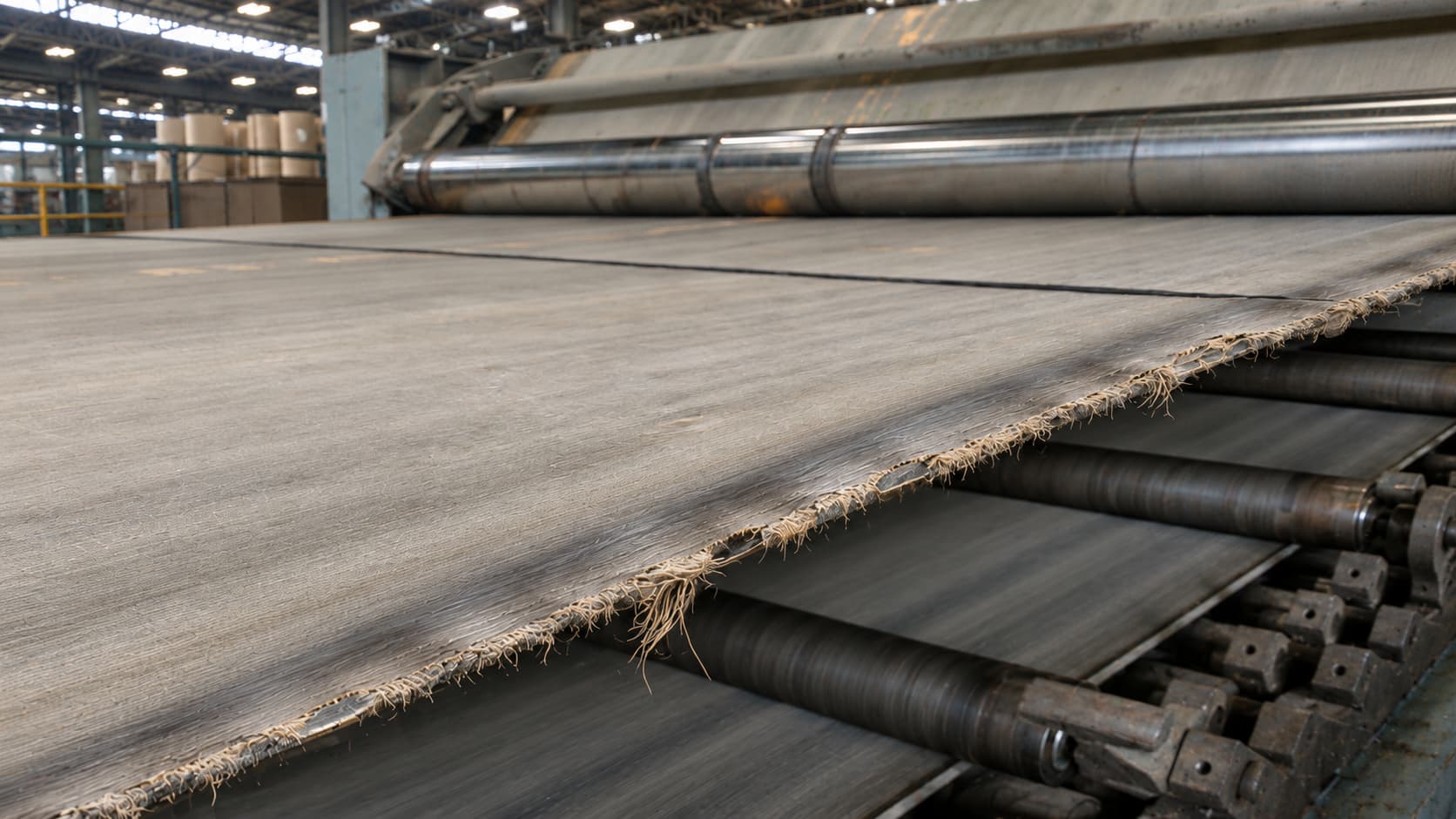
The table below is the working core of this guide. Match the observed pattern to the likely causes and the checks that confirm or clear each one.
|
Wear position |
Most likely causes |
Checks to run |
|
One edge only |
Tracking bias; tension higher on that side; guide roller misadjusted; worn drive roll lagging on that side |
Watch the belt run for tracking wander; compare tension readings side to side; inspect guide rollers, sensors and take-ups; check lagging surface |
|
Both edges, symmetric |
Web regularly narrower than belt; missing or ineffective edge protection; edge-unfriendly belt construction |
Compare web width records against belt width; check how often edges run bare; inspect edge construction of the belt |
|
Center band |
Hot plate crowned or running hot in the middle; web tension generally too high; plate deposits in the center |
Check plate level and crown; verify steam conditions; measure actual tension against setting |
|
Band aligned with a plate seam or roll line |
Plate out of level; pressure roll nip uneven; deposit or damage at that position |
Level check at the seam; nip impression test on the pressure roll; inspect and clean the deposit |
|
Around the splice |
Joint out of square; joint too thick or hard; splice hardware striking rollers |
Measure joint squareness and thickness; watch one full revolution against plate edges |
|
Grooves, short pitch |
Foreign object trapped in a plate gap; hardened glue lump; debris on a roll |
Walk the plate gaps; inspect glue unit drip zones; check roll surfaces |
|
Fuzzy all over, worse at edges |
Abrasive furnish (high recycled share); worn surface structure; cleaning neglect |
Review furnish data; compare surface with a new belt sample; audit cleaning schedule |
Because side-loading is the most common root cause, these checks come first in the physical inspection. Watch the belt run for a full cycle and note whether it wanders or holds a steady off-center line — steady bias points to a fixed setting error; wander points to a loose or cyclic fault. Verify that both sides of the tensioning system read the same and respond the same, and inspect guide rollers for wear flats and the sensors for drift.
Correct installation geometry underpins all of it — square belt installation, balanced take-up, guides that steer gently rather than force. The corrugator belt installation guide lists the setup points, and periodic re-checks are part of the daily maintenance routine that catches drift while it is still an adjustment rather than a wear band.
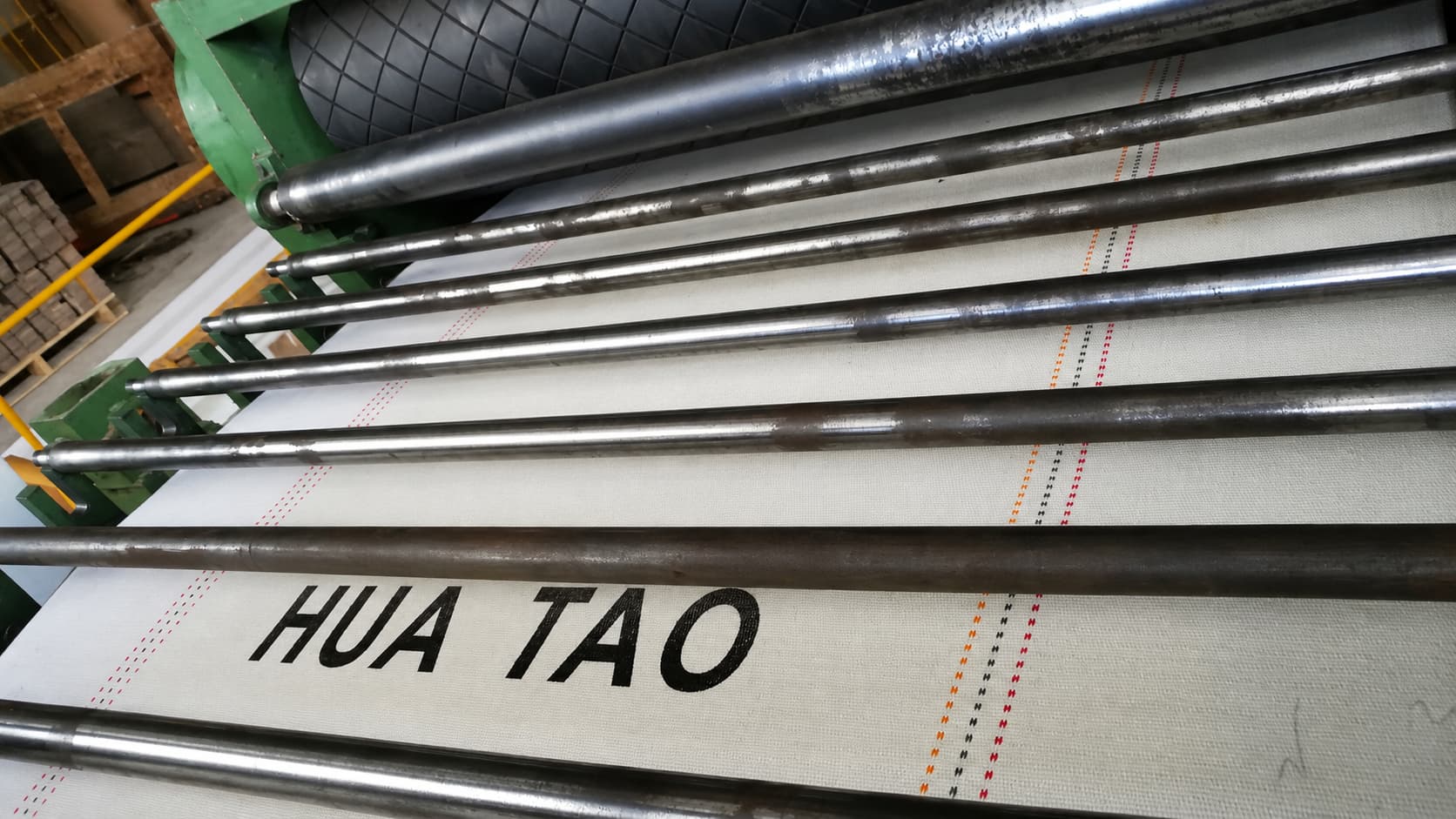
If tracking and tension come back clean, the wear map usually points into the hot plate section. Check plates for level and crown, seams for deposits, and pressure rolls for nip evenness. The double facer hot plate section is where a surprising share of "belt problems" actually live, because plate faults are invisible from the walkway until someone goes looking.
Then look at the web. Chronic warp presses one band of the board harder into the belt; uneven moisture does the same in softer form; glue gaps set asymmetrically load one side of the line. A wear pattern and a warp complaint that appeared together should be investigated as one problem with two symptoms.
The remaining causes are the cheapest to fix and the easiest to overlook. Starch and paper dust accumulating in plate gaps and along one width band form an abrasive paste; hard debris machines grooves. A cleaning audit — frequency, method, and whether the plate gaps get attention — resolves most of it, and the belt cleaning guide covers the methods that avoid damaging the belt surface while removing deposits.
Joint faults show up in the wear map as splice-localized wear and as secondary wear on whatever the joint strikes. Joint technique — square, flush, correctly fastened — is a maintenance skill worth training deliberately; the joint repair guide walks through the procedure and its common failures.
If the checklist clears the machine — tracking correct, tension balanced, plates sound, web flat, joints clean — and wear was still uneven, the belt construction itself was likely mismatched to the operation. The questions to put to the supplier are concrete: weave and weight suited to the line speed, surface suited to the furnish's abrasiveness, and edge reinforcement suited to the width practice. Where narrow webs and recycled grades dominate, constructions like the armoured edges corrugator belt or the reinforced builds described in the Kevlar edge belt guide change the wear economics materially. The woven corrugator belt range covers the standard constructions most plants start from.
 FAQ
How long does the checklist take?
The wear map and tracking/tension checks fit into a running shift. Plate and roll inspection needs a window, but a competent crew covers it in a few hours. Most plants find the cause within the first two steps.
Can we keep running on an unevenly worn belt while we diagnose?
Usually yes, with the wear pattern photographed and monitored. The risk is quality drift — warp and bond variation — plus accelerated wear once a band thins. Monitor weekly and set a replacement trigger in advance.
Should we flip or rotate the belt to even out wear?
Some plants rotate belts end-for-end or run double-loop belts in ordered rotations to distribute wear. It helps only after the cause is fixed; rotating a belt under an active side-loading fault just moves the wear band.
What records make diagnosis faster?
Tracking adjustment history, tension readings by side, web width mix by week, splice dates and methods, and monthly wear photos. Five minutes of logging per shift buys a diagnosis in hours instead of days.
When is repair better than replacement?
Trimming and resealing minor edge fraying, or redoing a poor joint, can extend life meaningfully. Uneven thinning across the width or wear into the load-carrying weave ends the repair conversation.
Uneven corrugator belt wear rewards method over budget. Build the wear map, decode it against the table, verify tracking and tension, then walk into the machine — plates, rolls, web, joints, contamination — in the order the evidence points. The checklist costs a shift or two; buying the same fault a second time with a new belt costs far more, especially in a year when paper costs have climbed through successive increases and recycled furnish keeps getting harsher.
If your plant is working through this checklist and the wear map does not resolve cleanly, HUATAO GROUP can help read the pattern. Send the photos plus your machine model, working width, operating speed and furnish mix, and our team — a corrugator belts supplier and solution provider — will support the diagnosis and, if replacement is due, recommend a construction matched to what the investigation found.
Contact: Chris Xue | HUATAO GROUP
Email: chris@huataogroup.com
WhatsApp: +86 19322109200
Website: www.htwirebelt.com
can not be empty
can not be empty


Web: www.htwirebelt.com
TEL : +0086 0311 80690567
EMAIL:market@huataogroup.com
WhatsApp & WeChat :
+86 18033763037