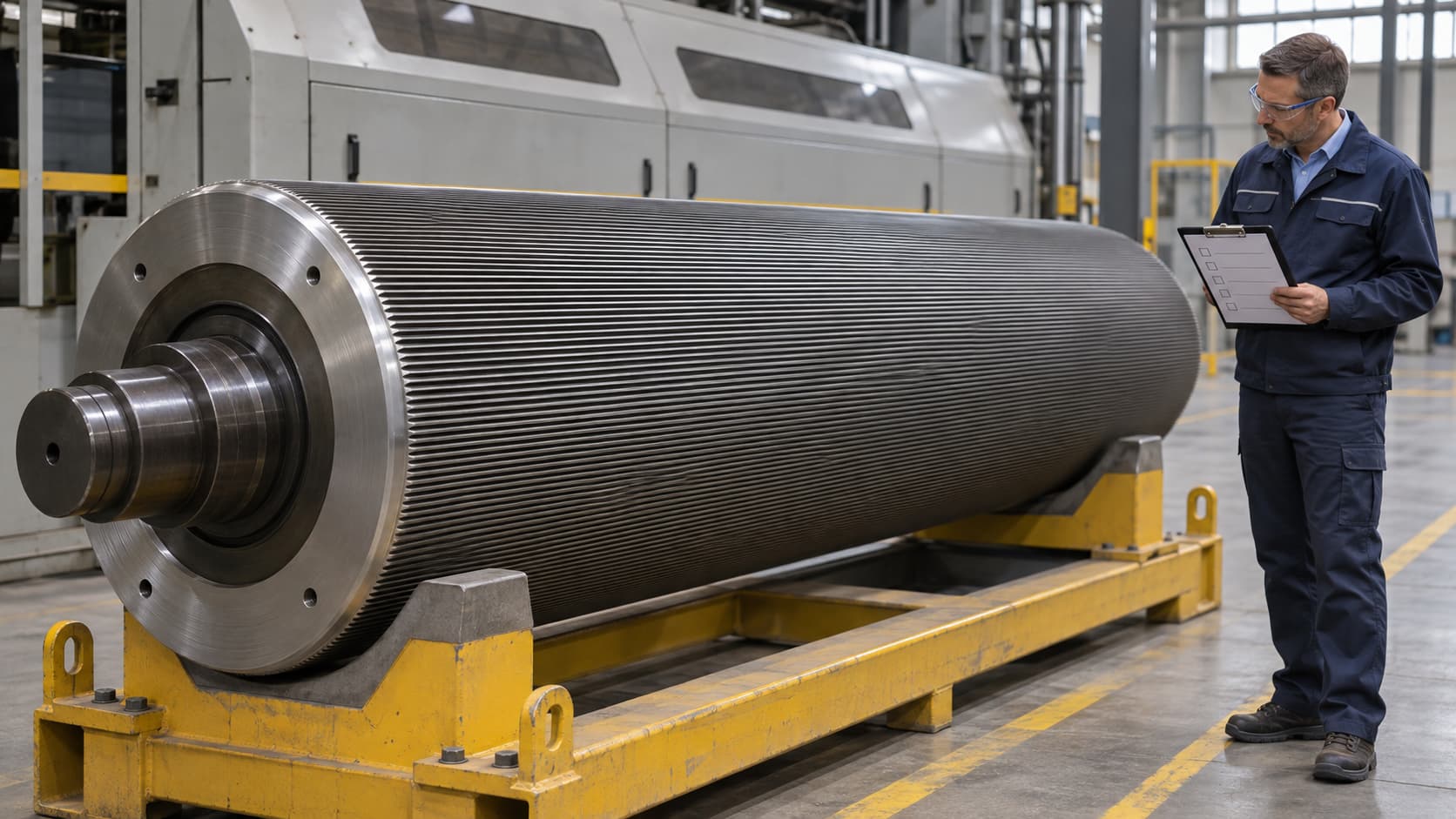
For most corrugated plants, corrugating rolls sit somewhere between "critical asset" and "out of sight, out of mind." They are expensive, they wear slowly, and they fail quietly — through board quality drift rather than through a dramatic breakdown. That combination makes them easy to under-manage until the invoice for a regrind or replacement lands.
This article is written for the production or maintenance manager who wants to move roll management from reactive to planned. It covers where roll life actually gets lost, a checklist you can adapt to your own line, the coating question, and how to plan replacements without production pain.
Roll wear has clear physical causes, but the root causes behind them are almost always operational:
Paper. Recycled liner and medium bring grit into the nip. Abrasive wear from contaminants is the dominant wear mode on most modern lines, and it scales directly with paper cleanliness. Plants that manage web cleaning and watch incoming paper quality consistently get longer roll life from identical roll sets.
Pressure. The nip should run at the minimum pressure that forms clean flutes. Every unnecessary kilogram of force grinds the profile faster — and usually masks a different problem (dry paper, worn pressure roll surface, low steam pressure) instead of solving it. For context on the components involved, see the pressure roll and its role in the nip.
Moisture. Dry paper running over hot metal is a grinding operation without lubrication. Humidification before the nip reduces friction and improves formation together. Many plants have made spray humidification standard equipment for exactly this double benefit.
Heat. Thermal cycling, long hot static stands, and unstable steam supply open surface cracks and distort geometry. Temperature discipline costs nothing and protects both the roll and the board.
Handling. Deposits scraped off with hard tools, rolls stored on edge, journals unprotected, installation misaligned — a surprising share of roll damage happens off the machine. The cleaning and storage guide for corrugating rollers sets out safe procedures for exactly this phase.
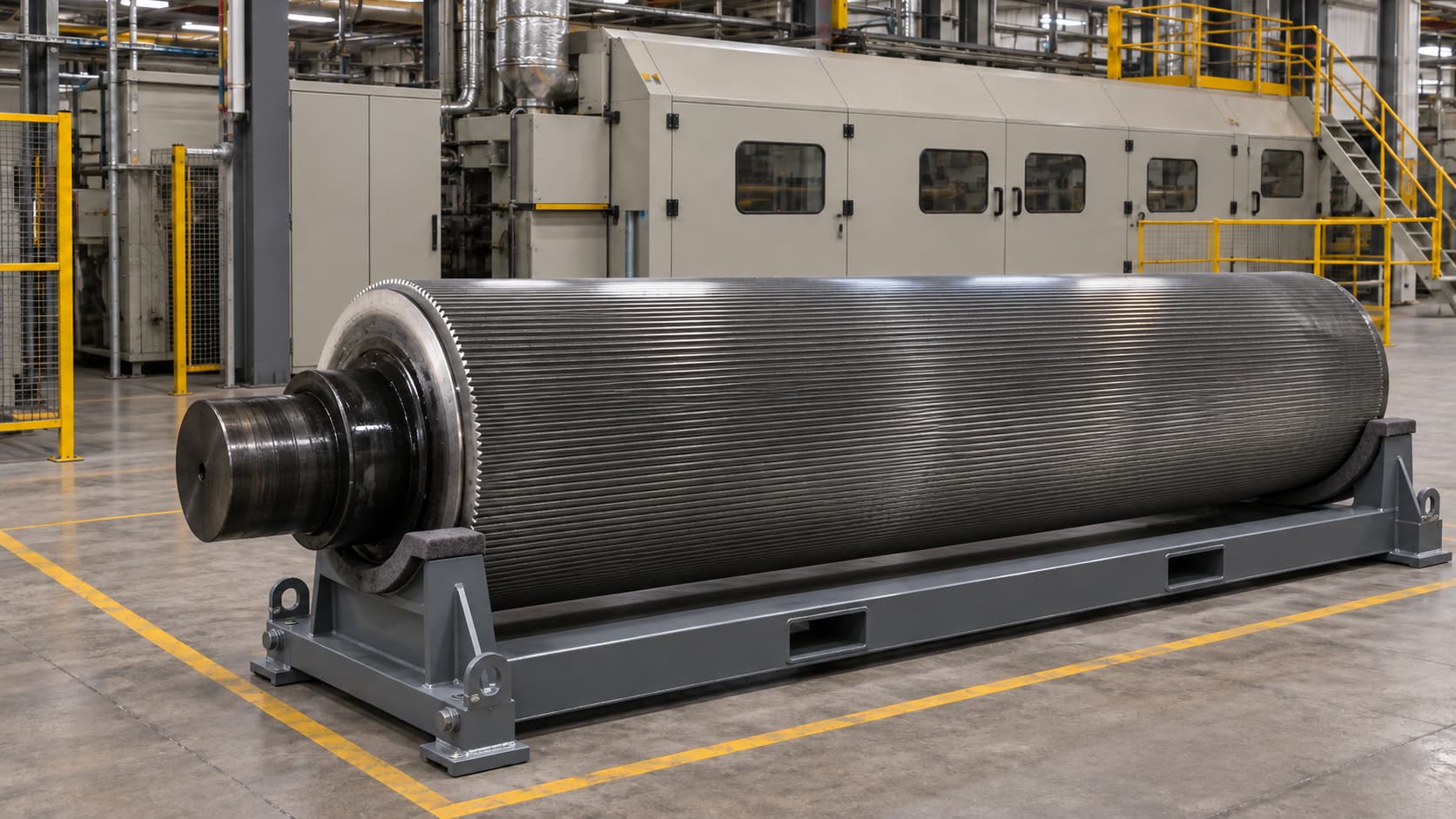
The table below is a practical starting point. Adjust the frequencies to your line speed, paper mix, and historical wear data — the logic is: high-cost checks happen often and take minutes; deep checks happen rarely and take planning.
|
Check item |
Frequency |
What to look for |
Who |
|
Nip noise and vibration |
Daily |
New grinding sounds, intermittent knocking |
Operator |
|
Visible deposits on flutes |
Daily |
Starch lumps, paper dust accumulation |
Operator |
|
Nip pressure vs. spec |
Every grade change |
Pressure creeping above documented setting |
Operator / supervisor |
|
Web tension settings |
Every shift |
Tension outside documented range per grade |
Operator |
|
Steam pressure stability |
Daily |
Fluctuations, low pressure alarms |
Operator |
|
Humidification spray pattern |
Weekly |
Blocked nozzles, uneven wetting bands |
Maintenance |
|
Board flute height consistency |
Weekly |
Drift across width, flat spots in formation |
QC |
|
Glue bond quality trend |
Weekly |
Weak bonds wandering across the width |
QC |
|
Warp and reject rate trend |
Weekly |
Rising warp often signals roll wear first |
Production manager |
|
Flute tip profile measurement |
Per planned stop |
Tip rounding, localized wear bands |
Maintenance |
|
Roll surface condition |
Per planned stop |
Cracks, coating flaking, corrosion spots |
Maintenance |
|
Steam rotary joint condition |
Monthly |
Leaks, unstable roll temperature |
Maintenance |
|
Stored roll condition |
Monthly |
Journals protected, surface clean, rotation done |
Warehouse |
The weekly board-quality rows deserve emphasis. Board drift is the leading indicator of roll wear — it typically appears weeks before profile measurements reach their limit. Teams that act on board signals early regrind less material per cycle and keep more total life out of each roll.
 The Coating Question, Answered With Your Own Data
Tungsten carbide coatings dominate the conversation around roll life for good reason: on lines with high abrasive wear — typically recycled paper at higher speeds — the coated surface resists exactly the mechanism that kills steel rolls early. The full cost logic is set out in why choosing tungsten carbide corrugating rolls saves production costs.
But the decision should follow your plant's wear data, not the market's default. The comparison that matters is total cost per running meter of board across the roll's whole life, including regrinds and the board-quality effects of profile degradation. A slower line running mostly virgin grades may find a well-managed steel roll more economical; a fast line on recycled medium usually finds the opposite. Two plants with identical machines can reach opposite correct answers.
 Roll heating design is part of the same decision. Uneven surface temperature across the roll face drives both quality variation and thermal stress; designs like the periphery heating flute roller specifically target that distribution problem.
The expensive part of a roll failure is rarely the roll. It's the unplanned stop, the expedited freight, the board shipped late to a customer. Two planning moves remove most of that risk:
Keep a regrind schedule with a spare. Track profile loss per regrind, project the next service date, and make sure a spare set (or a planned cassette change) covers the interval. Roll replacement can then happen in a planned window instead of an emergency — see avoiding downtime during flute roller replacement.
 Order replacements with complete parameters. When a new roll is needed, incomplete specifications are the classic cause of a roll that "fits but never runs right." Have ready: machine model, working width, operating speed, roll dimensions, and flute profile. Suppliers can confirm compatibility before manufacturing, which protects both your production and your budget.
Checklists fail when nobody owns them. Assign the daily rows to operators, the weekly rows to maintenance and QC, and give the production manager the trend review — five minutes a week looking at whether flute consistency, bond quality, and warp are drifting. When they drift, investigate before touching pressure settings.
Two implementation details decide whether the system survives contact with real production. First, record every deviation: if an operator overrides a documented pressure setting, write down why. Those notes become the plant's institutional memory and the raw material for the next settings revision. Second, review the checklist itself quarterly — grades change, speeds change, and paper mixes change, so the documented settings and check frequencies need to follow.
Roll life extension is not a project; it's a rhythm. The plants that treat it that way stop buying rolls by surprise — and start buying them by calendar. The payoff compounds: a stable wear-rate dataset makes the next coating decision easier, a predictable regrind schedule keeps spare inventory lean, and steady board quality removes an entire category of customer complaints from the weekly meeting.
If you want to turn this checklist into a concrete plan — coating decision, regrind schedule, or a replacement roll specification — HUATAO GROUP can help. As a supplier and solution provider for corrugating rolls and corrugator spare parts, we work from your actual parameters: machine model, working width, operating speed, and flute profile. Send them over and we'll respond with a recommendation and quotation.
Contact: Chris Xue | HUATAO GROUP
Email: market@huataogroup.com
WhatsApp: +86 19322109200
Website: www.htwirebelt.com
can not be empty
can not be empty


Web: www.htwirebelt.com
TEL : +0086 0311 80690567
EMAIL:market@huataogroup.com
WhatsApp & WeChat :
+86 18033763037